How Many Throw Pillows Should a Sofa Have
Determining how many throw pillows should a sofa have is often more about personal comfort than strict design rules. You want your seating area to feel inviting while keeping enough space available for people to actually sit down.
Most professional designers suggest starting with a simple count based on your sofa length as of 2026. A crowded couch often leads to clutter, but the right balance can make a room look complete.
Quick Answer
A standard sofa typically needs three to five throw pillows. Use two pillows for a small loveseat. Keep the number odd for visual balance.
Always leave enough space to sit comfortably. Avoid adding more than seven total cushions.
The Sit-Space Problem: Why Your Sofa Feels Overcrowded
The most common mistake people make is treating a sofa like a showroom display. If your guests have to move a mountain of cushions just to sit down, your arrangement is failing the function test.
Your sofa is primarily a piece of furniture meant for relaxing. When you overcrowd the cushions, you lose valuable seating depth and back support. This often results in cushions being tossed onto the floor, which defeats the purpose of the decor.
Aim for a setup that allows you to sit without rearranging the entire sofa. If you feel like you are fighting against the pillows, remove one or two immediately. A clean, uncluttered sofa almost always looks more expensive and intentional than a crowded one.
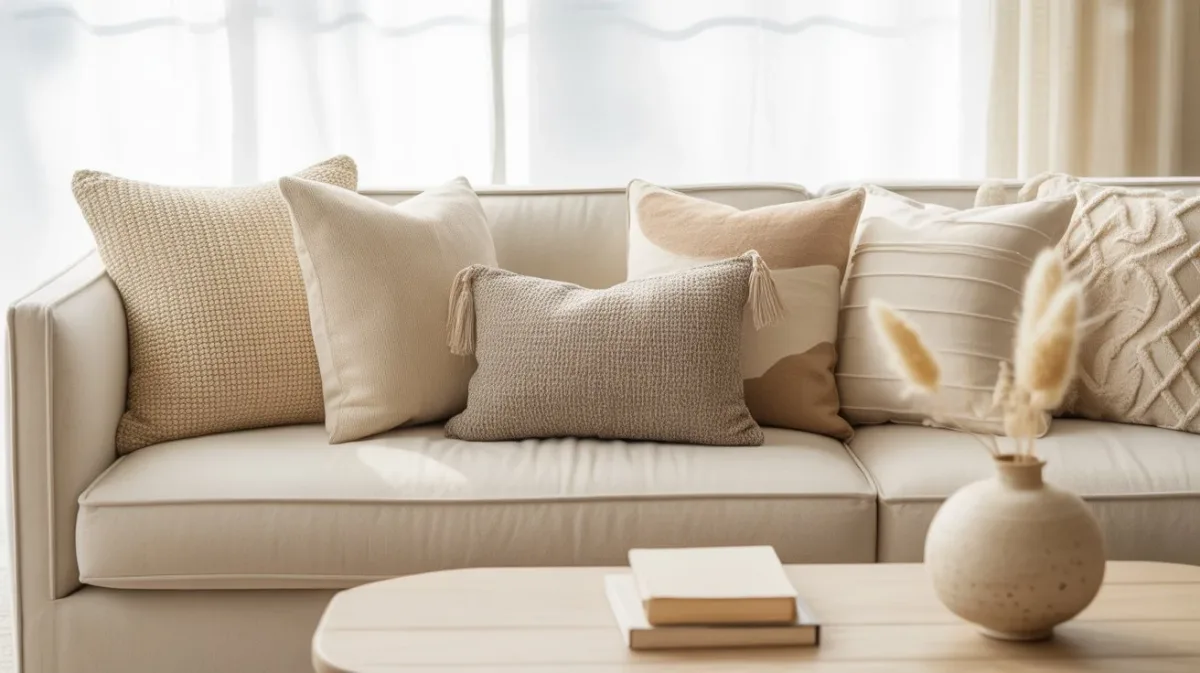
Image source: Bing (Web (fair-use with source credit))
The Science of Visual Balance: Odd Numbers and Asymmetry
Designers often rely on the rule of odds to create visual interest. An odd number of items creates a sense of movement that feels natural to the human eye. Three or five pillows often look better than two or four because they avoid a rigid, static feeling.
This approach works because it prevents the sofa from looking like a mirrored reflection. Asymmetry feels more relaxed and inviting, which is exactly the vibe most people want in their living room.
If you prefer a structured look, symmetry is still an option. Two matching pillows on opposite ends can anchor a formal space perfectly. The key is to ensure the pillows are proportional to the sofa's frame so they don't look like an afterthought.

Image source: Web (Bing) / pinterest.ca (Web image (fair-use with source credit))
Assessing Your Sofa’s Physical Anatomy
Before you finalize your pillow count, look at the shape of your sofa frame. High, rolled arms provide a natural bookend for your pillows. You might get away with fewer cushions here since the arms do some of the visual work for you.
Low-profile or track-arm sofas are different. These often have a very clean, linear aesthetic. You might find that you need slightly larger or more substantial pillows to create a comfortable lean against the flat backrest.
Consider the depth of your seat as well. A very deep sofa can swallow small pillows, making them look lost. Always choose sizes that provide enough back support for your specific frame height.
Per National Institute of Standards and Technology guidance on ergonomics, comfort is subjective, so adjust based on how you personally use the seat.
Step-by-Step Arrangement: From Corner Anchors to Center Accents
Start by placing your largest pillows in the corners of the sofa. These act as your anchors and define the outer edges of the seating area. If you are using three pillows, place one at each end and one in the middle.
Layer smaller pillows in front of the larger ones to create depth. This adds a sense of richness without making the seat feel cramped. Ensure the colors or textures coordinate without matching perfectly.
| Pillow Count | Best Arrangement Pattern |
|---|---|
| 2 Pillows | One on each far end |
| 3 Pillows | Two at ends, one in center |
| 5 Pillows | Two in each corner, one centered |
Avoid stuffing the corners so tightly that the pillows push off the seat. A good pillow should stay in place when you stand up.
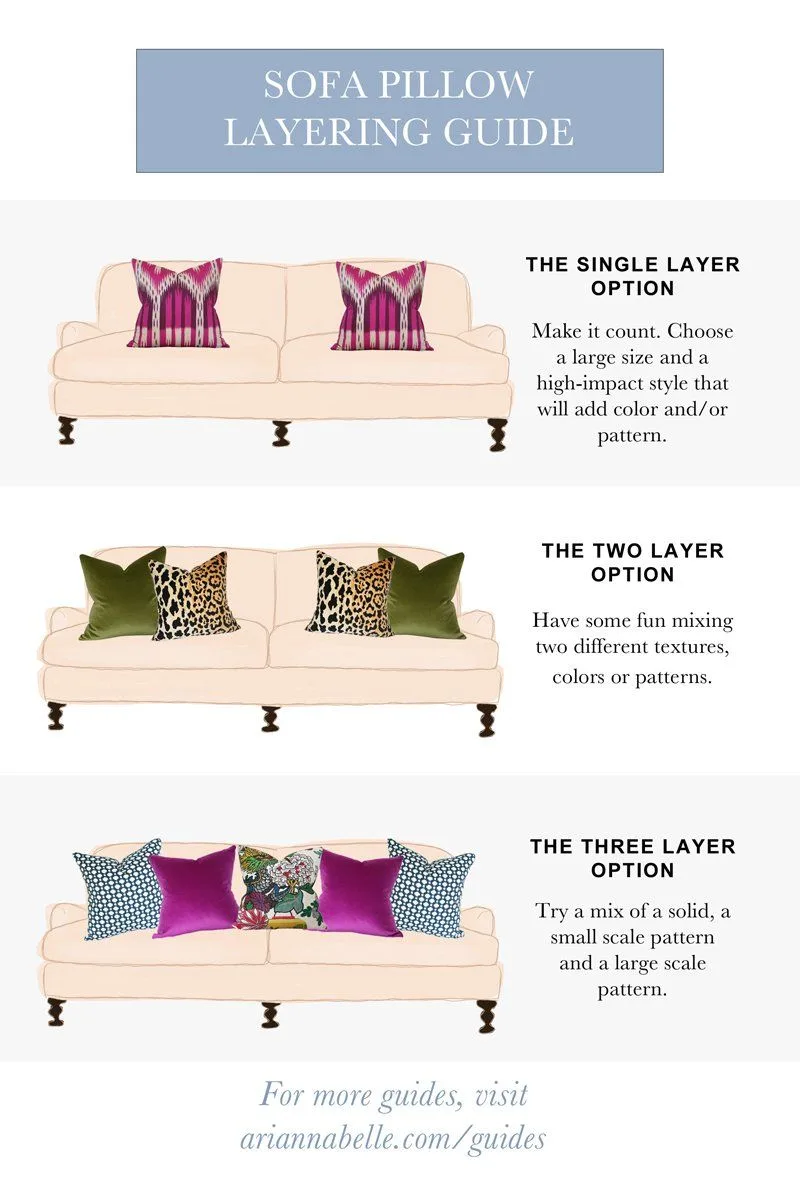
Image source: Web (Bing) / pinterest.com (Web image (fair-use with source credit))
Common Styling Mistakes That Ruin Comfort
One of the biggest errors is choosing pillow inserts that are too soft or too small for their covers. This makes them look flat and tired rather than plush. Always choose an insert that is one or two inches larger than your pillow cover for a crisp, full look.
Another issue is ignoring the scale of the sofa. Huge pillows on a small loveseat will make the furniture look tiny. Conversely, tiny pillows on a massive sectional look like they belong in a dollhouse.
Finally, stop trying to coordinate every pillow color with your wall paint. Your throw pillows are an opportunity to add contrast, texture, and personality. A little bit of variety prevents the room from feeling flat or overly "catalog-perfect."
Layering Techniques for Different Sofa Styles
Layering is the art of mixing sizes and textures to avoid a flat, one-dimensional look. Start with a neutral foundation of larger, solid-colored pillows. These provide the structure your back needs for support while creating a backdrop for your accent pieces.
For a modern, minimalist sofa, keep the layering simple. You might pair two larger square pillows with one smaller, rectangular lumbar pillow in the center. This keeps the lines clean while adding just enough softness to make the sofa inviting.
If your sofa is traditional or oversized, you have more room to play. Try a "stair-step" arrangement where you place larger pillows in the back and medium ones in front. This creates a cozy, lived-in feel that softens the harder edges of the furniture frame.
| Sofa Style | Recommended Layering Method |
|---|---|
| Modern / Minimalist | One large, two small / lumbar |
| Traditional / Rolled Arm | Two large, two medium, one small |
| Sectional | Large square back, smaller square front |
Always remember that textures matter as much as colors. Mixing a smooth linen pillow with a chunky knit or velvet cover adds depth. This tactile variety is what makes a professional arrangement look so successful.
Frequently Asked Questions About Throw Pillow Decor
How do I stop pillows from falling off the sofa?
Pillows fall off because they are either too large for the seating area or they lack enough structure. Choose high-quality down or synthetic inserts that fill the corners of your pillow covers completely. Over-stuffing the cover ensures the pillow stays put instead of sliding forward.
Should my throw pillows match the sofa color?
They don't have to match, but they should complement the overall palette of your room. Matching the sofa color exactly can make the pillows disappear, while high-contrast colors draw the eye. Use a color wheel to find shades that harmonize with your existing upholstery and wall tones.
Can I mix patterns with throw pillows?
Mixing patterns is a great way to add character, provided you stick to a consistent color story. Use one large-scale pattern, such as a floral or geometric print, and pair it with a solid color and a subtle texture. Keeping the color family consistent prevents the look from becoming chaotic.
How often should I replace pillow inserts?
Replace your inserts when they start to look flat or lose their ability to "chop" and hold a shape. Depending on the quality of the fill, this usually happens every two to three years. If you notice they aren't providing firm back support, it is time for an upgrade.
Final Verdict: Curating Your Own Custom Look
There is no single magic number that fits every home. Your goal is to find the intersection of comfort and visual appeal. Start by removing all your pillows and adding them back one by one, testing the sit-space at every stage.
Trust your eye over rigid design conventions. If the sofa feels good to sit on and looks balanced to you, it is perfect. Your living space should serve your lifestyle, not the other way around.
Keep your collection focused on quality rather than quantity. A few well-made, comfortable pillows will always outperform a dozen cheap ones that end up on the floor. Take your time to curate a look that feels authentic to your personal taste.